Resistance tube exercises provide a portable and affordable strength-training solution, perfect for workouts anywhere, anytime, mirroring gym benefits without the cost or space constraints.
These versatile tools, often seen in gyms, are increasingly popular for home fitness, offering a convenient alternative to traditional weights and machines for building strength.
Resistance bands are low-maintenance, lightweight, and easily stored, making them ideal for travelers or those with limited space, targeting all muscle groups effectively.
What are Resistance Tubes?
Resistance tubes, also known as resistance bands, are elastic bands used for strength training and physical therapy. They come in varying resistance levels, typically color-coded, allowing for progressive overload as strength increases. Unlike traditional weights, resistance tubes provide variable resistance – the further you stretch the band, the greater the resistance becomes.
These tubes are incredibly versatile, capable of mimicking many weightlifting exercises. They can be used for a full-body workout, targeting all major muscle groups. Often constructed from latex or rubber, they are lightweight, portable, and relatively inexpensive, making them accessible to a wide range of fitness levels.
You’ll often find them with or without handles, offering different grip options. They are a fantastic alternative when gym access is limited or for those seeking a convenient home workout solution, delivering similar muscle engagement to free weights;
Benefits of Using Resistance Tubes
Resistance tubes offer a multitude of benefits, making them a valuable addition to any fitness routine. Their portability and affordability are key advantages, allowing for effective workouts anywhere, anytime, without a significant financial investment. They’re also incredibly versatile, suitable for all fitness levels, from beginners to advanced athletes.
Unlike free weights, resistance tubes provide constant tension throughout the entire range of motion, leading to increased muscle activation. This variable resistance can also enhance muscle endurance and improve functional strength. They are gentle on joints, making them ideal for rehabilitation or individuals with joint pain.
Furthermore, resistance tubes are low-maintenance and easy to store, fitting seamlessly into a busy lifestyle. They effectively build strength, improve flexibility, and contribute to overall fitness.
Resistance Tubes vs. Free Weights
Resistance tubes and free weights both effectively build strength, but differ in their approach. Free weights offer a consistent level of resistance throughout an exercise, relying on gravity. Tubes, however, provide progressive resistance – the tension increases as the tube stretches, challenging muscles differently.
While weights are excellent for building maximal strength, tubes excel at enhancing muscular endurance and functional movements. Tubes are generally more joint-friendly due to the constant tension, reducing stress compared to the impact of weights. They are also significantly more portable and affordable.
Ultimately, the “best” choice depends on individual goals. Tubes are ideal for beginners, travel workouts, or rehabilitation, while weights are often preferred for serious strength gains and powerlifting.

Getting Started with Resistance Tube Workouts
Embarking on resistance tube workouts requires selecting the appropriate resistance level, prioritizing safety, and gathering minimal equipment for effective and accessible strength training.
Choosing the Right Resistance Level
Selecting the correct resistance is crucial for maximizing benefits and preventing injury when starting with resistance tubes. Beginners should typically begin with lighter resistance, focusing on mastering proper form before increasing the challenge.
Resistance tubes often come in color-coded levels, indicating varying degrees of tension – typically ranging from extra light to extra heavy. A good starting point is to choose a resistance where you can comfortably perform 10-15 repetitions with good form.
If you struggle to complete the repetitions, or if the exercise feels too easy, adjust accordingly. Gradually increase the resistance as your strength improves, ensuring controlled movements throughout each exercise. Don’t hesitate to experiment with different levels to find what suits your individual fitness level and goals.
Remember, consistency and proper technique are more important than immediately using the highest resistance available.
Safety Precautions
Prioritizing safety is paramount when incorporating resistance tubes into your fitness routine. Always inspect tubes for any cracks, tears, or signs of wear before each use, discarding damaged tubes immediately to prevent snapping during exercise.
Securely anchor the tubes to a stable object, ensuring it won’t move or shift during the exercise. Maintain a firm grip on the handles, and avoid overstretching the tubes, as this can increase the risk of injury.
Focus on controlled movements throughout each exercise, avoiding jerky or rapid motions. Warm up properly before starting your workout and cool down afterward with static stretches. Listen to your body and stop if you experience any pain.
Proper form is essential; consider consulting a fitness professional for guidance if you’re unsure about correct technique.
Essential Equipment (Beyond the Tubes)
While resistance tubes are incredibly versatile, a few supplementary items can significantly enhance your workout experience and safety. A door anchor is invaluable, providing a secure attachment point for a wider range of exercises, expanding your routine possibilities.
Comfortable athletic shoes are crucial for stability and support during lower body movements like squats and lunges. A yoga mat offers cushioning for floor exercises, protecting your joints and providing a non-slip surface.
Consider investing in handles or ankle straps for increased grip and exercise variety. A mirror can help monitor your form, ensuring proper technique and maximizing effectiveness. Finally, a water bottle is essential for staying hydrated throughout your workout.
These additions elevate the experience, making it more effective and enjoyable.

Full Body Resistance Tube Workout Plan
Resistance tube workouts effectively build strength and muscle throughout the entire body, offering a versatile and accessible fitness solution for all levels of experience.
Warm-up Exercises
Prior to any resistance tube workout, a thorough warm-up is crucial for injury prevention and maximizing effectiveness. Dynamic stretching, incorporating the tubes, prepares muscles and joints for the demands ahead.
Begin with arm circles, using a light resistance tube to enhance the movement and increase blood flow to the shoulders. Follow this with leg swings, securing the tube around your ankles for added challenge and improved flexibility.
Torso twists with the tube provide a gentle spinal mobilization, while band pull-aparts activate the back muscles. These exercises increase range of motion and prepare the neuromuscular system for more intense activity.
A proper warm-up should last approximately 5-10 minutes, gradually increasing your heart rate and preparing your body for the full-body resistance tube routine. Remember to listen to your body and avoid pushing beyond your comfortable limits.
Dynamic Stretching with Tubes
Integrating resistance tubes into dynamic stretches elevates warm-ups, enhancing muscle activation and preparing the body for exercise. Begin with tube-assisted arm circles – holding the tube with slightly bent arms, perform forward and backward rotations, focusing on controlled movements.
Next, perform leg swings, securing the tube around ankles, gently swinging legs forward, backward, and side-to-side. This improves hip mobility and hamstring flexibility. Tube torso twists involve holding the tube across the chest and rotating the torso, engaging core muscles.
Band pull-aparts, holding the tube with straight arms, pull it apart horizontally, activating the back and shoulder muscles. These dynamic movements increase blood flow, range of motion, and neuromuscular readiness, minimizing injury risk.
Perform each stretch for 30-60 seconds, focusing on smooth, controlled motions.
Upper Body Exercises
Resistance tubes effectively target upper body muscles, offering a versatile alternative to weights. Bicep curls are performed by standing on the tube and curling upwards, focusing on controlled contractions. Tricep extensions involve anchoring the tube overhead and extending the arms downwards, isolating the triceps.
Chest presses utilize the tube anchored behind you, pressing forward as if performing a dumbbell chest press, engaging pectoral muscles. Shoulder presses involve standing on the tube and pressing upwards, targeting deltoids.
For back work, perform seated rows, anchoring the tube in front and pulling towards the torso, squeezing shoulder blades together. These exercises build strength and endurance, adapting to various fitness levels.
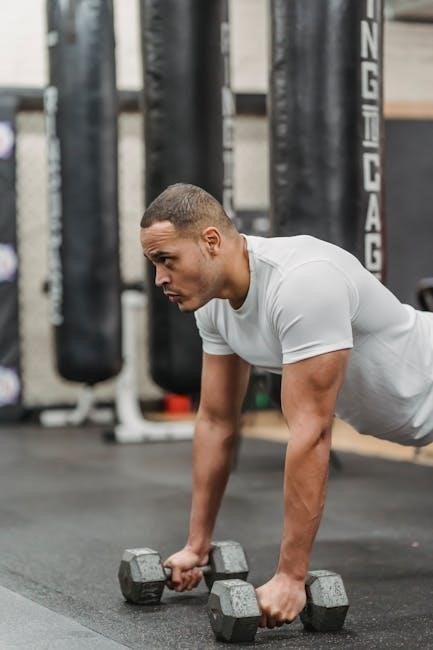
Aim for 3 sets of 10-15 repetitions for each exercise, adjusting resistance as needed.
Bicep Curls with Resistance Tubes
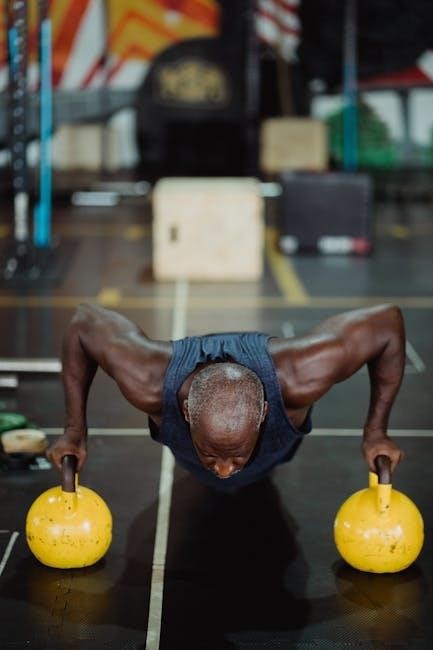
Resistance tube bicep curls are a fantastic way to isolate and strengthen your biceps at home or on the go. Begin by standing with your feet shoulder-width apart, placing the center of the resistance tube under both feet. Hold the handles with palms facing upwards, maintaining a slight bend in your elbows.
Slowly curl the handles upwards towards your shoulders, keeping your elbows close to your body and focusing on contracting your biceps. Control the movement throughout the entire range of motion, avoiding swinging or using momentum.
Gradually lower the handles back to the starting position, resisting the pull of the tube. Perform 3 sets of 10-15 repetitions, adjusting the tube’s resistance level as needed to challenge your muscles effectively.
Tricep Extensions with Resistance Tubes
Resistance tube tricep extensions effectively target the back of your upper arms, building strength and definition. Secure the resistance tube under a stable object, like a sturdy chair or door anchor. Hold the handle with both hands, extending your arms overhead, keeping your elbows close to your head.
Slowly bend your elbows, lowering the handle behind your head while maintaining control and keeping your upper arms stationary. Focus on contracting your triceps as you extend your arms back to the starting position, fully straightening your elbows.
Complete 3 sets of 12-15 repetitions, selecting a resistance level that challenges you without compromising form. Proper form is crucial to avoid injury and maximize results.
Chest Press with Resistance Tubes
Resistance tube chest presses are a fantastic way to work your pectoral muscles, replicating the benefits of a traditional bench press. Secure the resistance tube around a stable anchor point behind you, at roughly chest height. Grasp the handles with your palms facing forward, elbows bent at 90 degrees.

Step forward to create tension in the tube, then press your hands forward, extending your arms straight out in front of your chest. Squeeze your chest muscles at the peak of the movement, then slowly return to the starting position, controlling the resistance.
Perform 3 sets of 12-15 repetitions, adjusting the tube’s resistance to match your strength level. Maintain good posture throughout the exercise for optimal results and injury prevention.
Shoulder Press with Resistance Tubes
Resistance tube shoulder presses effectively target your deltoids, building strength and definition in your shoulders. Stand on the middle of the resistance tube with your feet shoulder-width apart, securing it under your feet. Grip the handles with palms facing forward, elbows bent at 90 degrees, and hands at shoulder height.
Press your hands upwards, extending your arms overhead, keeping your core engaged and back straight. Squeeze your shoulder muscles at the top of the movement, then slowly lower your hands back to the starting position, maintaining control.
Complete 3 sets of 12-15 repetitions, selecting a resistance level that challenges you without compromising form. Proper technique is crucial to avoid injury and maximize results.
Lower Body Exercises
Resistance tubes are incredibly versatile for sculpting and strengthening your lower body. Incorporating them into squats, lunges, and glute bridges adds an extra layer of challenge and enhances muscle activation. For squats, stand on the tube and hold the handles at your shoulders, performing squats as usual, feeling the resistance throughout the movement.
Lunges benefit from the tube looped around your ankles or held for added stability and intensity. Glute bridges become more effective by placing the tube just above your knees, forcing your glutes to work harder to maintain proper form.
These exercises build strength, improve stability, and enhance overall lower body functionality, making resistance tubes a valuable tool for a comprehensive workout.
Squats with Resistance Tubes
Performing squats with resistance tubes significantly increases the intensity and effectiveness of this fundamental exercise. To begin, center yourself on the resistance tube, positioning it comfortably under your feet, shoulder-width apart. Securely grip the handles with your hands, positioning them at shoulder height.
Maintain a straight back, engaged core, and slowly lower your hips as if sitting into a chair, ensuring your knees track over your toes. The resistance tube provides constant tension throughout the entire range of motion, challenging your quads, glutes, and hamstrings.
Drive through your heels to return to the starting position, squeezing your glutes at the top. Focus on controlled movements and proper form to maximize results and prevent injury.
Lunges with Resistance Tubes
Resistance tube lunges elevate this classic exercise, adding consistent tension for enhanced muscle engagement. Begin by standing on the resistance tube, positioning it under the foot of your leading leg. Securely grip the handles, one in each hand, at shoulder height, maintaining a stable core.
Step forward into a lunge, lowering your body until both knees are bent at approximately 90-degree angles. Ensure your front knee stays aligned over your ankle and your back knee doesn’t touch the ground. The resistance tube actively works your glutes, quads, and hamstrings.
Push off with your front foot to return to the starting position, and repeat on the opposite leg. Prioritize controlled movements and proper form for optimal results and injury prevention.
Glute Bridges with Resistance Tubes
Resistance tube glute bridges significantly amplify this effective lower-body exercise, targeting the glutes and hamstrings with consistent tension. Lie on your back with your knees bent and feet flat on the floor. Position the resistance tube around your thighs, just above your knees, securing the ends.
Grip the tube’s ends with your hands, maintaining a neutral spine and engaged core. Press through your heels to lift your hips off the floor, squeezing your glutes at the top of the movement. The resistance band creates outward pressure, intensifying glute activation.
Slowly lower your hips back down, maintaining tension on the tube throughout the exercise. Repeat for desired repetitions, focusing on controlled movements and proper form for maximum benefit.
Core Exercises
Resistance tubes are incredibly versatile for strengthening your core, offering dynamic resistance that challenges stability and control. Incorporating tubes into core work elevates traditional exercises, demanding greater muscle engagement. Two excellent options include Resistance Tube Russian Twists and Plank Variations.
Russian Twists with a tube involve sitting with knees bent, feet slightly elevated, and looping the tube around your feet, holding the ends. Twist your torso from side to side, maintaining core engagement and resisting the pull of the tube.
For Plank Variations, secure the tube around your feet while in a plank position. This adds instability, forcing your core to work harder to maintain proper form. These exercises enhance core strength and stability, crucial for overall fitness.
Resistance Tube Russian Twists
Resistance Tube Russian Twists are a fantastic core exercise, amplifying the challenge of traditional twists with dynamic resistance. To perform, sit on the floor with your knees bent and feet slightly elevated, or planted for more stability. Secure a resistance tube around your feet, grasping the ends with both hands.
Maintaining a straight back and engaged core, twist your torso from side to side, bringing the tube across your body. Focus on controlled movements, resisting the pull of the tube throughout the entire range of motion.
This exercise effectively targets your obliques, rectus abdominis, and lower back muscles, improving rotational strength and core stability. Aim for 15-20 repetitions per side, adjusting the tube’s resistance as needed.
Resistance Tube Plank Variations
Resistance Tube Plank Variations elevate the standard plank, intensifying core engagement and adding a dynamic element to this foundational exercise. Begin in a standard plank position, then loop a resistance tube around your feet or ankles. Maintain a straight line from head to heels, actively squeezing your glutes and drawing your navel towards your spine.
For side planks, position the tube around your ankles and perform controlled hip dips, resisting the band’s pull. Alternatively, perform plank jacks with the tube around your ankles, adding a cardio burst.
These variations challenge your stability and endurance, targeting your core, shoulders, and legs simultaneously. Aim for 30-60 second holds, or 15-20 repetitions per side, adjusting resistance as needed.

Advanced Resistance Tube Techniques
Progress beyond basic exercises by increasing resistance, combining movements, and designing personalized routines for optimal results and continued muscle challenge and growth.
Increasing Resistance
As your strength improves with resistance tube exercises, progressively increasing the challenge is crucial for continued muscle development and preventing plateaus. Several techniques allow for this advancement without necessarily purchasing heavier tubes immediately.
One effective method is to shorten the length of the tube during the exercise; this increases the tension, making the movement more difficult. Alternatively, doubling up the tubes – using two tubes instead of one – provides a significant resistance boost.
Furthermore, slowing down the tempo of your repetitions increases the time under tension, intensifying the workout. Focusing on controlled movements and maximizing the contraction phase also enhances the challenge. Finally, consider decreasing rest periods between sets to further elevate the intensity and build endurance.
Remember to prioritize proper form throughout these adjustments to avoid injury and maximize effectiveness.
Combining Exercises
To maximize workout efficiency and challenge your muscles in new ways, combining resistance tube exercises is a highly effective strategy. This approach, often called “supersets” or “circuit training,” keeps your heart rate elevated and boosts calorie burn.
Pairing exercises that target opposing muscle groups – such as bicep curls followed immediately by tricep extensions – allows one muscle group to recover while the other works, minimizing rest time. Alternatively, combine upper and lower body exercises in a circuit for a full-body challenge.
For example, perform a set of squats immediately followed by a set of chest presses. Varying the order of exercises each workout prevents adaptation and keeps your muscles guessing. Remember to maintain proper form throughout each combination to avoid injury and optimize results.
Creating Your Own Workout Routine
Designing a personalized resistance tube workout allows you to tailor exercises to your specific fitness goals and preferences. Begin by identifying your target muscle groups and selecting exercises that effectively work those areas, drawing inspiration from established routines.
Consider your fitness level – start with lighter resistance and fewer repetitions, gradually increasing both as you gain strength. Structure your routine with a warm-up, a series of exercises, and a cool-down. Incorporate a variety of exercises to ensure a balanced, full-body workout.
Don’t be afraid to experiment with different combinations and resistance levels. Regularly assess your progress and adjust your routine accordingly to continue challenging your muscles and achieving optimal results. Remember consistency is key for long-term success!
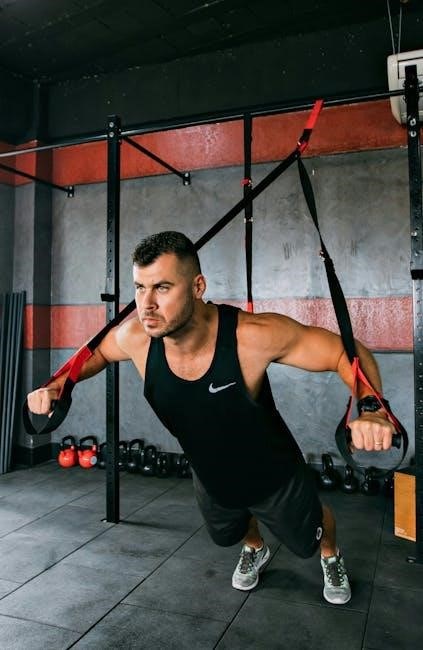
Resources for Resistance Tube Exercises (PDFs & Guides)
Numerous online resources offer downloadable PDFs and comprehensive guides to enhance your resistance tube workout experience. Many fitness websites and personal trainers provide free workout plans specifically designed for resistance bands, catering to various fitness levels and goals.
Searching for “resistance tube exercises PDF” will yield a wealth of printable routines, often including detailed exercise instructions and visual demonstrations. These guides frequently categorize workouts by muscle group, making it easy to target specific areas.
Explore platforms like fitness blogs and YouTube channels for video tutorials and downloadable workout sheets. Remember to prioritize resources from qualified fitness professionals to ensure proper form and safety. Utilizing these resources can significantly diversify and improve your training.