High School Soccer Tryout Plan
A comprehensive plan ensures fair evaluation, focusing on technique, tactics, fitness, and psychological aspects— mirroring a typical practice session for realistic assessment.
This tryout plan outlines a structured process for selecting high school soccer players, prioritizing a balanced assessment of skills. The evaluation will encompass technical proficiency, tactical understanding, physical conditioning, and psychological suitability for team integration.
Tryouts aren’t merely skill showcases; they’re opportunities for coaches and players to connect. The sessions will emulate regular practices, providing a realistic view of player capabilities. Clear communication and efficient organization are crucial for a fair and productive tryout experience, ultimately building a cohesive team.
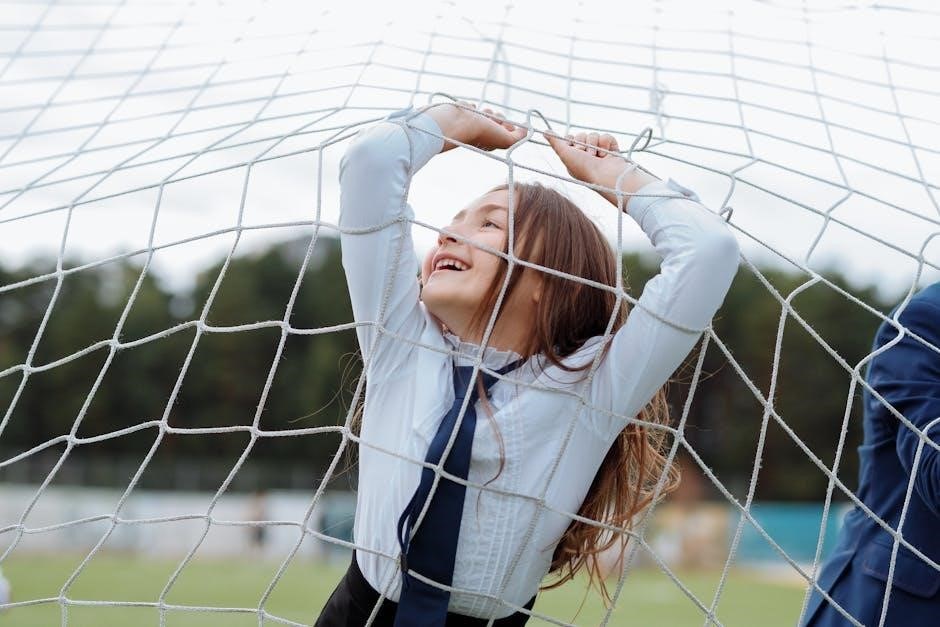
Tryout Goals & Evaluation Criteria
The primary goal is identifying players demonstrating a balance of technique, tactical awareness, physical fitness, and positive psychological attributes for team success.
Technical Skills Assessment
This assessment will rigorously evaluate fundamental soccer skills. Drills will focus on dribbling, emphasizing ball control and agility through cones and varied terrain. Passing accuracy and range will be tested with targeted drills, assessing both short and long distribution.
Shooting power and precision will be observed during instep drive shooting practice. Furthermore, a 1-on-1 defending drill will gauge individual defensive technique and ability to win possession. Evaluators will utilize a technical skill checklist to objectively score each player’s performance;
Tactical Awareness Evaluation
Tactical understanding will be assessed through dynamic, game-realistic drills. A 6v4 attacking drill will evaluate transition play, observing players’ decision-making in offensive scenarios and ability to exploit space. A defensive shape and pressing drill will assess organization and collective defensive principles.

Full-sided scrimmages, simulating game conditions, will reveal players’ tactical application under pressure. Evaluators will use a tactical understanding rubric, focusing on positioning, movement off the ball, and overall game intelligence.
Physical Fitness Testing
Physical fitness is crucial; testing will include a high-intensity ladder drill, barge exercises, bounding through hoops, and heading drills. A wall pass drill with a coach, combined with turn and spin exercises, will assess agility and passing accuracy.
Fartlek shooting drills will evaluate endurance and shooting under fatigue. Key factors include maintaining quality work at high intensity. These drills will gauge players’ stamina, speed, and overall athletic conditioning for competitive play.
Psychological Assessment (Team Fit)
Tryouts offer a unique opportunity for coaches to assess a player’s character and potential team contribution beyond skill. Observing player interactions during drills and small-sided games reveals communication styles and willingness to collaborate.
Coaches should look for positive attitudes, coachability, and resilience under pressure. Assessing a player’s response to feedback and their overall demeanor provides insight into their team fit and mental fortitude.
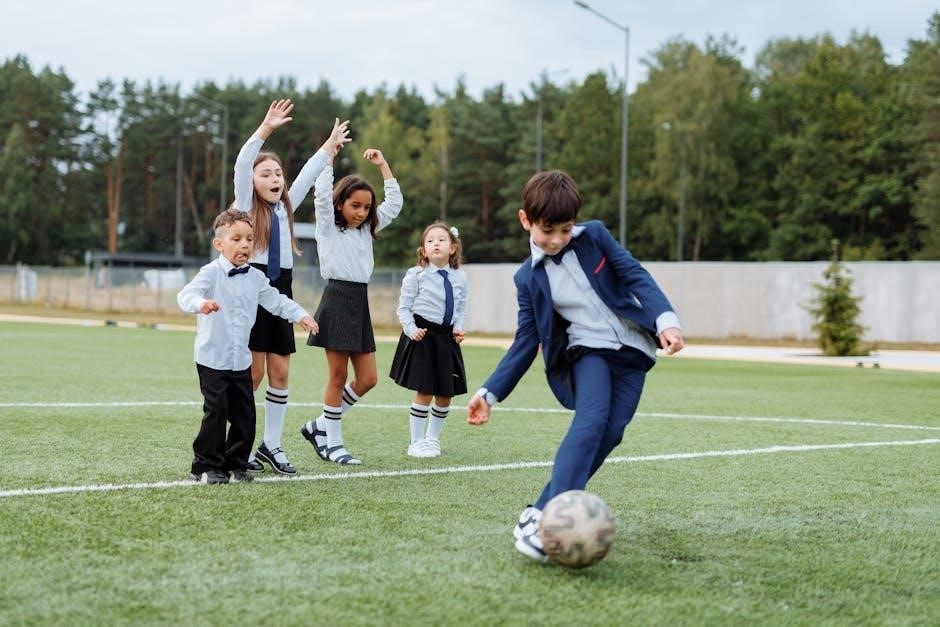
Tryout Schedule ー Day 1
Day one prioritizes foundational skills with a dynamic warm-up, focused technical drills, and small-sided games emphasizing possession and initial player evaluation.
Warm-up & Dynamic Stretching (15 minutes)
Begin with light jogging for three minutes, progressing to dynamic stretches like leg swings, arm circles, and torso twists. Include high knees, butt kicks, and lateral shuffling to prepare muscles for activity.
Focus on movements mimicking soccer-specific actions, increasing range of motion and blood flow. Incorporate ladder drills for agility and coordination, followed by a brief static stretch holding each position for fifteen to twenty seconds.
This phase aims to prevent injuries and optimize performance during subsequent drills and evaluations.
Technical Drills (45 minutes)
This segment assesses fundamental skills, starting with dribbling and ball control exercises, evaluating players’ close control and agility with the ball. Progress to passing accuracy and range drills, observing technique, weight of pass, and ability to switch play.
Include wall passes and short combination play to gauge first touch and passing precision. Observe players’ ability to receive and distribute under pressure.
These drills provide a baseline for technical proficiency, crucial for identifying potential team members.
Dribbling & Ball Control Drills
Implement a ladder drill to enhance footwork and agility, followed by a ‘barge’ drill focusing on shielding the ball under pressure. Include bounding through hoops to improve coordination and ball manipulation in tight spaces.
Assess players’ ability to perform turns and spins effectively, observing their technique and speed of execution. Emphasize high intensity with quality work, evaluating control at speed.
These drills reveal a player’s comfort and proficiency with the ball, essential for success.
Passing Accuracy & Range Drills
Utilize wall pass drills with a coach to evaluate first touch, passing weight, and accuracy under pressure. Observe players’ ability to execute instep drives, assessing both power and precision during shooting practice.
Incorporate a passing game to test decision-making and passing range in a dynamic environment. Focus on short and long passing, evaluating the ability to switch play effectively.
These drills reveal a player’s distribution skills and ability to connect passes consistently.
Small-Sided Games (30 minutes)
Implement 3v3 or 4v4 scrimmages, prioritizing possession and quick passing to assess tactical understanding in reduced spaces. Observe players’ decision-making, movement off the ball, and ability to maintain shape.
These games simulate match conditions, revealing a player’s ability to apply technical skills within a tactical framework. Evaluate their communication, support play, and creativity under pressure.
Focus on evaluating how players transition between offense and defense during these dynamic scenarios.
3v3 or 4v4 Scrimmage ー Focus on Possession
This drill emphasizes maintaining possession under pressure, demanding quick thinking and accurate passing. Observe players’ first touch, ability to shield the ball, and vision to find open teammates.
Encourage players to utilize short, incisive passes and intelligent movement to create passing lanes. Assess their willingness to support the ball carrier and make themselves available for passes.
Evaluate decision-making regarding when to pass, dribble, or shoot, prioritizing possession over risky individual plays.
Tryout Schedule ⎼ Day 2
Day two features advanced tactical drills and a full-sided scrimmage, simulating game conditions to assess player performance and team dynamics effectively.
Warm-up & Review (10 minutes)
Begin with light jogging and dynamic stretching, including ladder drills, bounding through hoops, and wall passes with a coach, emphasizing high intensity with quality work.
Briefly review key concepts from Day 1, focusing on tactical principles and expected player roles.
This phase prepares players physically and mentally for the more demanding drills and scrimmage ahead, reinforcing previous instruction and setting the tone for the session.

Advanced Tactical Drills (40 minutes)
Implement a 6v4 attacking drill to assess transition play and decision-making under pressure, observing players’ ability to quickly shift from defense to offense.
Follow with a defensive shape and pressing drill, evaluating players’ understanding of positioning, communication, and coordinated defensive efforts.
These drills challenge players to apply tactical knowledge in game-like scenarios, revealing their strategic awareness and teamwork capabilities.
6v4 Attacking Drill ー Transition Play
This drill focuses on rapid transitions from defense to attack, with six attacking players versus four defenders.
Observe players’ speed of thought, passing accuracy under pressure, and ability to exploit space created during the transition.
Evaluate their decision-making regarding when to pass, dribble, or shoot, and their overall contribution to a quick, effective counter-attack.
Defensive Shape & Pressing Drill
This drill assesses the team’s ability to organize defensively and apply coordinated pressure on the opposing team.
Observe players’ positioning, communication, and willingness to close down space.
Evaluate their tackling technique, interception skills, and ability to win the ball back in key areas of the field.
Look for understanding of defensive principles and collective effort in denying the opposition time and space;
Full-Sided Scrimmage (40 minutes)
This simulates a real game scenario, allowing observation of players’ decision-making, tactical awareness, and overall performance under pressure.
Utilize full soccer rules to assess their understanding of the game and ability to apply skills in a competitive environment.
Evaluate their positioning, passing accuracy, shooting ability, and defensive contributions within a team context.
Observe how they react to different game situations and their ability to adapt and problem-solve on the field.
Game Simulation with Full Rules
Implementing complete soccer regulations during the scrimmage provides a realistic assessment of players’ game intelligence and rule comprehension.
This allows coaches to observe how athletes apply learned tactics and skills within the constraints of official gameplay.
Referees should enforce all rules consistently, mirroring a standard match environment for accurate evaluation.
Focus on observing decision-making, positioning, and adherence to the laws of the game under pressure, revealing true game readiness.
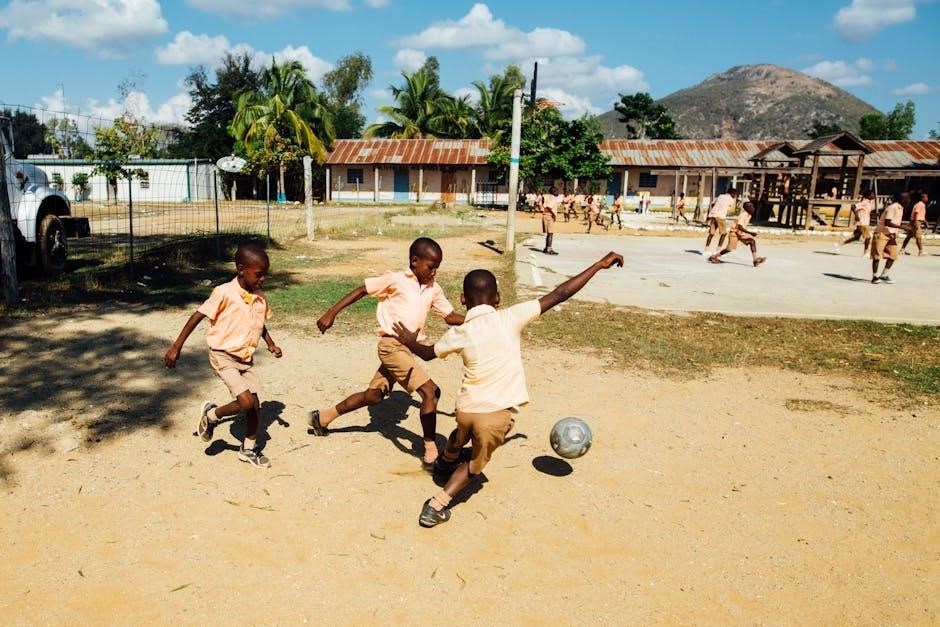
Equipment List
Essential items include multiple soccer balls, cones for drills, clearly marked goals with nets, and appropriate first-aid supplies for player safety.
Soccer Balls (Quantity & Size)
Ensure an ample supply of soccer balls to minimize downtime during drills and scrimmages; a minimum of ten balls is recommended, scaling up with participant numbers. Utilize size 5 soccer balls for male players and size 4 balls for female players, adhering to standard high school regulations. Having extra balls readily available prevents interruptions and maintains drill flow. Regularly check ball inflation levels before each session to guarantee consistent performance and accurate assessments of player technique. Consider having a few backup balls on hand to address potential damage during intense drills.
Cones & Markers
Cones and markers are essential for delineating drill areas, creating agility courses, and marking boundaries during small-sided games. A minimum of twenty cones is suggested, including both tall cones for clear visibility and flat discs for varied drill setups. Utilize different colored cones to distinguish teams or specific drill components. Markers should be durable and weather-resistant for outdoor use. Strategically placed cones enhance drill organization, improve player understanding of spatial awareness, and facilitate effective coaching during the tryout process.
Goals & Nets
Having access to regulation-size soccer goals with secure nets is crucial for evaluating shooting accuracy and game simulation scenarios. At least two full-sized goals are recommended, ensuring they are properly anchored for safety. Portable goals are a viable option if permanent structures aren’t available. Regularly inspect nets for damage and repair promptly. Goals facilitate realistic game assessments, allowing coaches to observe players’ finishing ability, shot power, and overall offensive contributions during the tryout sessions.
Evaluation Forms & Scoring
Utilize checklists and rubrics to objectively assess technical skills and tactical understanding, ensuring a standardized and transparent evaluation process for all players.
Technical Skill Checklist
This checklist assesses fundamental abilities. Evaluate dribbling technique – control, speed, and changes of direction. Assess passing accuracy (short/long range), weight, and technique. Observe first touch – control, cushioning, and setting up next play.
Rate shooting power, accuracy, and technique (instep, side-foot). Check receiving skills – aerial, ground balls, and under pressure. Finally, evaluate heading ability – power, accuracy, and defensive/offensive use. Each skill receives a score (1-5), with detailed notes for justification and player development insights.
Tactical Understanding Rubric
This rubric gauges game intelligence and decision-making. Assess players’ positioning – awareness of space, support angles, and defensive shape. Evaluate passing choices – recognizing open teammates and executing appropriate passes. Observe movement off the ball – creating space, making runs, and supporting attacks.
Rate defensive awareness – tracking runners, intercepting passes, and tackling technique. Check transition play – speed of thought and execution when switching between offense and defense. Scores (1-5) reflect tactical maturity, with notes detailing strengths and areas for improvement.

Communication & Player Feedback
Clear, timely information distribution is key; post-tryout communication should be prompt and respectful, providing constructive feedback to all participants.
Tryout Information Distribution
Effective distribution of tryout details is paramount. Utilize the school’s website, athletic department announcements, and social media platforms to widely publicize dates, times, location, and required documentation – like physical forms.
Email blasts to students and parents are crucial, including a detailed tryout schedule and expectations. Post flyers in high-traffic areas within the school. Ensure all communication clearly outlines the evaluation criteria, emphasizing the importance of technique, tactical understanding, physical fitness, and team fit.
A dedicated FAQ section can address common queries, streamlining the process and minimizing confusion.
Post-Tryout Communication Plan
Timely and transparent communication post-tryouts is essential for all participants. A predetermined timeline for roster announcements should be established and strictly adhered to. Utilize email as the primary method for notifying players of their status – made team or not.
Provide constructive feedback to those not selected, focusing on areas for improvement. Offer opportunities for individual meetings to discuss performance. Celebrate those who made the team, outlining next steps and expectations. Maintain professionalism and empathy throughout the entire process.

Legal Considerations & Waivers
Prior to tryouts, secure signed waivers from all participants (and parents/guardians if minors) acknowledging potential risks associated with athletic participation. These waivers should cover medical treatment authorization and liability release.
Ensure compliance with school district policies regarding physical examinations and medical clearance. Maintain accurate records of all waivers and medical documentation. Consult with the school administration and legal counsel to verify adherence to all applicable laws and regulations.