River Guide: A Comprehensive Career Plan (Updated 12/06/2025)
Embark on a thrilling career! This guide details the path to becoming a professional river guide, covering essential skills, certifications, and industry standards․
A Rewarding, Demanding Career: The river guiding profession offers a unique blend of outdoor adventure, customer service, and risk management․ It’s a career path for those passionate about rivers and sharing their beauty with others․ However, it demands significant training, physical fitness, and a commitment to safety․
Currently, there isn’t a universal standard for river guide education, but established Scope of Practice (SOP) guidelines exist for Wilderness First Aid and Wilderness First Responder, endorsed by the Wilderness Medical Society․ Professional guides must be prepared to handle wilderness emergencies effectively․ Successful completion of comprehensive training programs, like those leading to the IRF Guide Training & Education (GTE) Award, is highly valued and increasingly expected by employers․ This globally recognized certification, alongside Rescue 3 International river rescue credentials, signifies a commitment to professional standards․
II․ Essential Personal River Skills
Mastering the River Environment: Before guiding others, a river guide must possess exceptional personal river skills․ This foundation includes proficient swimming in moving water, self-rescue techniques, and the ability to confidently maneuver a raft or other river craft․ Demonstrating these skills at a “demo level” is crucial, especially for those aspiring to become instructors․
Beyond basic competency, guides need a deep understanding of river hydrology – reading currents, identifying hazards like strainers and holes, and predicting river behavior․ Paddling skills, rope work, and knot tying are also essential․ These skills aren’t merely about personal safety; they’re about inspiring confidence in clients and effectively managing any situation that arises on the water․ Continuous practice and refinement are key to maintaining proficiency․
III․ Physical Fitness and Health Requirements
Demanding Physical Role: River guiding is a physically demanding profession requiring a high level of fitness and overall health․ Guides routinely paddle, lift heavy equipment, hike to and from river access points, and perform rescues, often in challenging conditions․ Participants must be 18 years or older and should be in good health․
A strong cardiovascular base is essential, alongside muscular endurance and core strength․ Guides must be able to swim proficiently and comfortably in cold water․ Maintaining good health is not only vital for personal safety but also for effectively assisting clients․ Regular exercise, a balanced diet, and adequate rest are crucial components of a guide’s lifestyle․ Being physically prepared minimizes risk and maximizes performance on the river․
IV․ Wilderness First Aid & CPR Certification
Essential Medical Training: Professional river guides must be equipped to handle injuries and illnesses in remote wilderness settings․ Therefore, comprehensive wilderness medical training is non-negotiable․ While universally accepted standards are evolving, the Wilderness Medical Society endorses Scope of Practice (SOP) guidelines for Wilderness First Aid (WFA) and Wilderness First Responder (WFR) courses․
CPR certification is a foundational requirement, often bundled with WFA or WFR training․ These courses focus on prolonged patient care scenarios, resourcefulness with limited equipment, and decision-making in challenging environments․ Guides need to confidently assess, treat, and stabilize patients until professional medical help arrives – potentially hours away from civilization․
A․ Wilderness First Aid (WFA) Course Details
Foundational Wilderness Care: A Wilderness First Aid (WFA) course provides the essential entry point for aspiring river guides needing medical certifications․ Typically spanning 16-20 hours, WFA focuses on patient assessment, wound management, splinting, stabilization techniques, and environmental emergency protocols․ These courses emphasize utilizing available resources and improvising solutions when standard medical facilities are inaccessible․
WFA isn’t intended to create expert medical professionals, but rather to equip guides with the skills to provide immediate care for common backcountry injuries and illnesses until further help arrives․ Successful completion grants a provisional certification, often valid for two years, requiring periodic recertification to maintain proficiency․
B․ Wilderness First Responder (WFR) Course Details
Advanced Wilderness Medical Training: The Wilderness First Responder (WFR) course represents a significant step up from WFA, offering a more in-depth and comprehensive understanding of wilderness medicine․ Typically lasting 70-100 hours, WFR delves into advanced topics like patient evacuation, managing complex fractures, allergic reactions, and prolonged patient care scenarios․
WFR certification is highly valued within the professional river guiding community, often exceeding the minimum requirement for employment․ It prepares guides to handle critical incidents independently for extended periods․ Certification is generally valid for three years, necessitating recertification to ensure continued competence and updated medical knowledge․
V․ Rescue 3 International River Rescue Certification
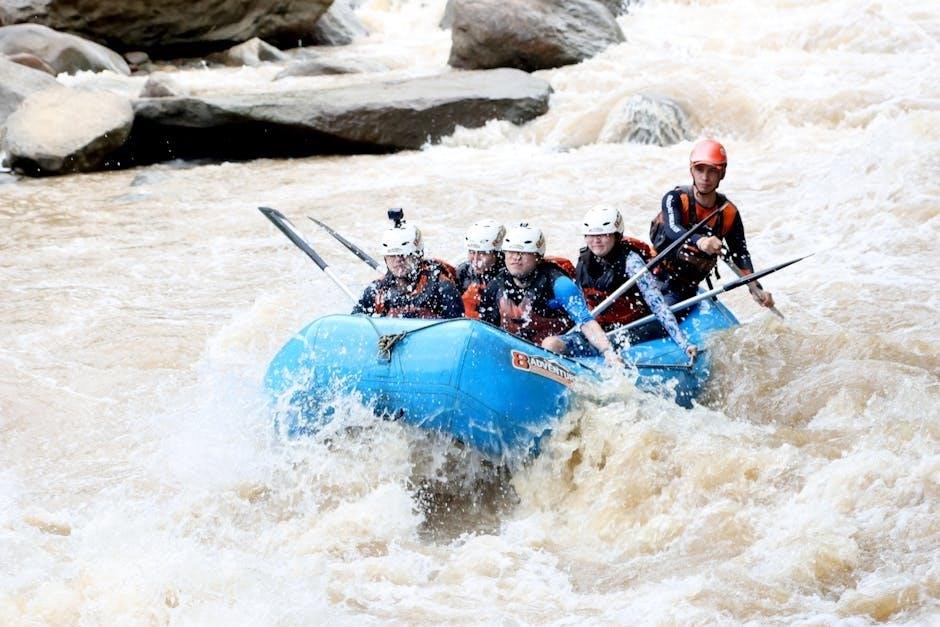
Essential Swiftwater Safety Skills: Rescue 3 International offers globally recognized river rescue certifications crucial for professional river guides․ These courses focus on self-rescue and victim rescue techniques in dynamic river environments․ Training covers hazard identification, throw bag deployment, swimming techniques, rope systems, and boat-based rescue procedures․
Successful completion equips guides with the skills to confidently manage common river hazards and respond effectively to emergencies․ Graduates often receive a provisional IRF Guide Training & Education (GTE) Award alongside their Rescue 3 certification, demonstrating a commitment to internationally recognized standards․ This certification is a cornerstone of a river guide’s skillset․
VI․ IRF Guide Training & Education (GTE) Award
The Gold Standard in Raft Guiding: The IRF Guide Training & Education (GTE) Award is currently the only globally recognized raft guiding certification․ Achieving this award signifies a high level of competence and professionalism․ The program emphasizes comprehensive training, covering river reading, group management, safety protocols, and environmental awareness․
Upon successful completion and administrative processing – including payment and instructor verification – your certificate will be emailed, and your status published on the IRF website․ It’s a valuable credential demonstrating dedication to best practices․ Graduates also often receive a provisional award alongside Rescue 3 International river rescue certification․
A․ Prerequisites for IRF GTE Certification
Laying the Foundation for Success: Before embarking on the IRF GTE program, several prerequisites must be met to ensure candidate readiness․ Participants must be at least 18 years of age and demonstrate good overall health and physical fitness․ Solid swimming skills are non-negotiable, as is a foundational understanding of river environments․
Crucially, instructor candidates must exhibit personal river skills at a demonstration level – meaning they can confidently and competently perform all skills they intend to teach․ Furthermore, a current Advanced First Aid certificate, encompassing a minimum of 16 hours of training including CPR, is mandatory․
B․ Training Modules within the IRF GTE Program
A Comprehensive Curriculum: The IRF GTE program delivers a robust curriculum designed to equip guides with the skills and knowledge needed for safe and effective river operations․ Core modules encompass advanced river reading, hazard identification, and dynamic risk assessment techniques․
Participants will hone their rescue skills, mastering techniques for swiftwater rescue, throw rope deployment, and victim extrication․ Guiding techniques, client management, and effective communication strategies are also central components․ Upon successful completion, graduates receive a provisional IRF GTE Award – currently the only globally recognized raft guiding certification – alongside a Rescue 3 International river rescue certification․
VII; Navigating Certifying Bodies & Certification Types
Understanding the Landscape: The river guiding industry utilizes several certifying bodies, each offering unique qualifications․ Key players include Rescue 3 International, providing swiftwater rescue certifications, and the International Rafting Federation (IRF), offering the globally recognized Guide Training & Education (GTE) Award․
Certification types range from Wilderness First Aid (WFA) and Wilderness First Responder (WFR) – crucial for backcountry medical emergencies – to specialized river rescue courses․ The IRF GTE represents a comprehensive standard, encompassing rescue skills, guiding techniques, and risk management․ Successfully navigating these options requires research and selecting certifications aligned with career goals and employer requirements․
VIII․ Regulatory Compliance for River Guides
Adhering to Standards: Regulatory compliance is paramount for river guides, ensuring both guest safety and operational legality․ While specific regulations vary by location – state, country, or river basin – adherence to established guidelines is non-negotiable․ This often includes permits for commercial river operations, mandatory guide certifications (like IRF GTE and swiftwater rescue), and adherence to safety protocols․
Furthermore, a strong ethical framework, exemplified by Leave No Trace principles, is increasingly viewed as a prerequisite for employment․ Guides must demonstrate responsible environmental stewardship and minimize their impact on the river ecosystem․ Compliance isn’t merely legal; it’s fundamental to professional credibility․
IX․ Ethical Framework: Leave No Trace Principles
Responsible River Stewardship: A robust ethical framework, centered around Leave No Trace (LNT) principles, is crucial for all river guides․ This goes beyond regulatory compliance, embodying a commitment to minimizing environmental impact and preserving the wilderness experience for future generations․ Guides are expected to actively practice and promote all seven LNT principles: Plan Ahead and Prepare, Travel and Camp on Durable Surfaces, Dispose of Waste Properly, Leave What You Find, Minimize Campfire Impacts, Respect Wildlife, and Be Considerate of Other Visitors․
Embracing LNT isn’t just good practice; it’s a non-negotiable employment prerequisite for modern guiding operations․
X․ River Guide Educational Requirements: Degrees & Majors
Formal Education & Specialized Knowledge: While a specific degree isn’t always mandatory, pursuing higher education can significantly enhance a river guide’s career prospects and skillset․ Relevant majors include Outdoor Recreation, Environmental Science, Wilderness Leadership, Biology, and even Emergency Medical Services․ These programs provide a strong foundation in ecological understanding, risk management, and group dynamics – all vital for guiding․
Furthermore, specialized coursework in hydrology, geology, and local flora/fauna demonstrates a commitment to comprehensive knowledge․ Many guiding companies prioritize candidates with demonstrable educational backgrounds alongside practical certifications․
XI․ Top Colleges & Institutions for River Guide Training
Premier Educational Pathways: Several institutions excel in providing comprehensive river guide training․ NOLS (National Outdoor Leadership School) offers extensive wilderness and river courses, focusing on leadership and technical skills․ Outward Bound provides similar immersive experiences, emphasizing character development alongside river proficiency․
Western Colorado University boasts a renowned Outdoor Recreation Industry program, while Humboldt State University in California offers strong environmental science and outdoor adventure degrees․ Additionally, specialized guiding schools like Rescue 3 and programs affiliated with the IRF (International Rafting Federation) deliver focused certifications․ These options cater to diverse learning styles and career aspirations․
XII․ Understanding the World Rafting Federation’s Handbook
The Definitive Resource: The World Rafting Federation’s (WRF) Class IV/A River Guide Handbook serves as the cornerstone for global raft guiding standards; It meticulously outlines the certification process, detailing prerequisites essential for aspiring guides․ This includes robust personal river skills and a solid foundation in wilderness safety․
Comprehensive Curriculum: The handbook breaks down training modules, specifying required competencies and evaluation criteria․ It covers crucial aspects like river reading, rescue techniques, and client management․ Furthermore, it emphasizes the importance of adhering to regulatory compliance and ethical practices, notably the Leave No Trace principles․ Successful completion, validated by the IRF, leads to globally recognized certification․

XIII․ Instructor Candidate Requirements
Elevated Standards for Educators: Becoming a river guide instructor demands a higher level of proficiency․ Personal river skills are paramount; candidates must demonstrate all skills they intend to teach at a “demo level,” showcasing mastery and precision․ This ensures they can effectively convey techniques to trainees․
Advanced Medical Training: A current Advanced First Aid certificate is non-negotiable, requiring a minimum of 16 hours of training, inclusive of CPR․ This reflects the instructor’s responsibility for managing emergencies during training scenarios․ Upon fulfilling all requirements – including payment and instructor submission – the IRF processes and issues certification, publicly listing the new instructor on their website․

A․ Personal River Skills Demonstration Level
Mastery in Action: Achieving the “demonstration level” of personal river skills is crucial for aspiring instructors․ This isn’t simply knowing a technique, but flawlessly executing it under observation․ Candidates must consistently perform skills with precision, efficiency, and safety, serving as a clear model for trainees․
Beyond Competency: This level signifies a deep understanding of the underlying principles, allowing instructors to adapt techniques to varying river conditions and student abilities․ It encompasses confident boat handling, precise maneuvering, effective paddle strokes, and swift rescue techniques․ The ability to articulate why a skill is performed a certain way is equally important, fostering critical thinking in students․
B․ Advanced First Aid Certificate Requirement (Minimum 16 Hours)
Critical Care Expertise: A current Advanced First Aid certificate, encompassing a minimum of 16 hours of training including CPR, is non-negotiable for river guide instructors․ This requirement reflects the heightened responsibility of teaching others to manage medical emergencies in remote wilderness settings․
Beyond Basic Response: This advanced certification equips instructors with the knowledge and skills to assess, treat, and stabilize a wider range of injuries and illnesses․ It covers topics like fracture management, spinal immobilization, wound care, and recognizing life-threatening conditions․ The curriculum emphasizes practical application and decision-making in challenging scenarios, preparing instructors to confidently handle real-world emergencies․

XIV․ The Realities of River Guide Training
Demanding, Yet Rewarding: River guide training is physically and mentally challenging, demanding dedication and resilience․ Expect rigorous coursework, intense on-water practice, and a steep learning curve․ It’s not simply about enjoying rivers; it’s about mastering safety protocols and emergency procedures․
Financial Considerations: Training programs represent a significant investment, encompassing course fees, travel, and potentially lost income․ Be prepared for these costs and explore available financial aid options․ The provisional IRF GTE Award and Rescue 3 certifications are valuable assets, but require commitment․

Physical and Mental Fortitude: Participants must be 18 years or older and possess good health and fitness․ The work is physically strenuous, requiring strength, stamina, and the ability to work long hours in demanding conditions․
XV․ River Guide Pay and Licensing
Earning Potential: River guide compensation varies widely based on experience, location, and employer․ Entry-level positions typically offer modest wages, with earning potential increasing with expertise and certifications like the IRF GTE Award․ Tips can supplement income, particularly on popular trips․
Licensing Requirements: Regulatory compliance is crucial․ Specific licensing requirements differ by region and river system․ Guides must adhere to local regulations and demonstrate proficiency in safety and rescue techniques․ Understanding these rules is a non-negotiable employment prerequisite․
Professional Standards: Maintaining current certifications, including Advanced First Aid (minimum 16 hours), is essential for continued employment and professional credibility․
XVI․ Succeeding as a River Guide: Key Attributes
Essential Qualities: Beyond technical skills, successful river guides possess a unique blend of personal attributes․ Excellent communication and interpersonal skills are paramount for building rapport with clients and ensuring a safe, enjoyable experience․
Physical & Mental Fortitude: Good health and overall fitness are vital, as the job demands physical exertion and the ability to respond effectively in challenging situations․ A calm demeanor under pressure and strong problem-solving abilities are also crucial․
Professionalism & Ethics: Adhering to a strong ethical framework, like Leave No Trace principles, demonstrates respect for the environment and enhances credibility․
XVII․ Maintaining Certification & Continuing Education
Recertification is Key: Maintaining current certifications – Wilderness First Aid, CPR, and Rescue 3 – is non-negotiable for professional river guides․ These credentials typically require periodic renewal, often every two years, ensuring skills remain sharp․
Ongoing Skill Development: The river guiding landscape evolves; therefore, continuous learning is essential․ Participating in advanced training modules, workshops, and industry conferences keeps guides updated on best practices and emerging safety protocols․
IRF GTE Updates: Staying informed about updates from the International Rafting Federation (IRF) regarding the Guide Training & Education (GTE) program is also vital for career progression․
XVIII․ Resources and Further Information
Essential Organizations: Explore the websites of the International Rafting Federation (IRF) – irf-rafting․org – for GTE program details and global standards․ Rescue 3 International (rescue3international․com) provides river rescue certification courses․
Wilderness Medicine Providers: Numerous organizations offer Wilderness First Aid (WFA) and Wilderness First Responder (WFR) courses; research providers like NOLS Wilderness Medicine, Wilderness Medical Associates International, and SOLO Wilderness Medicine․
Industry Associations: Connect with regional and national river guiding associations for networking opportunities, job postings, and industry insights․ The World Rafting Federation’s handbook is a crucial resource․